|
Ford Top Loader Three Speed Transmission Options |
||||
 |
||||
|
Home Parts Drawings Web Links Tune-Up & Service Serial Numbers Engine ID Trans Identification Model ID Terms of Sale Contact Us Our Online Store Our Catalog |
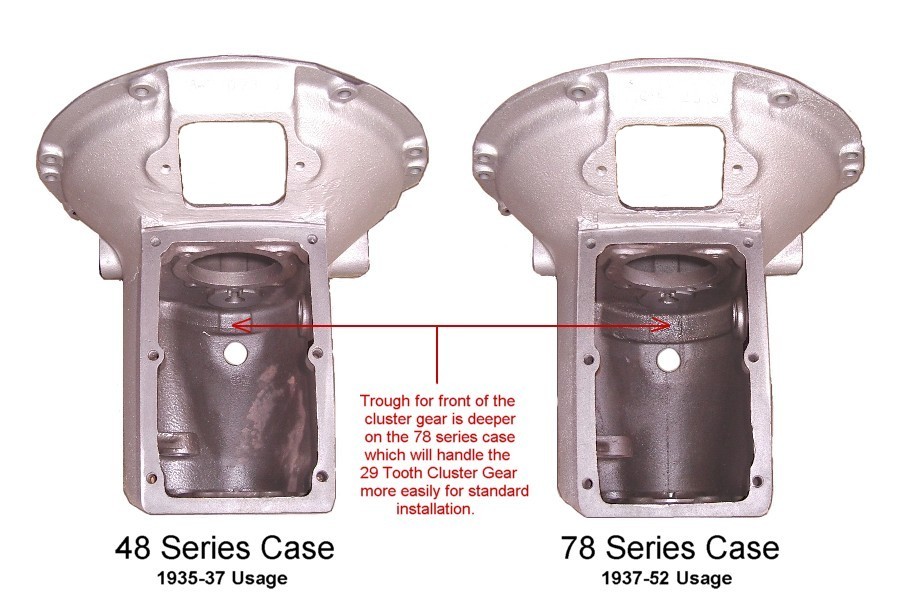
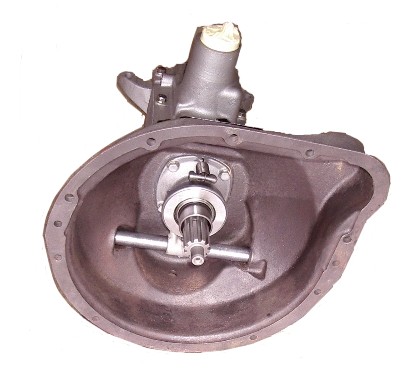
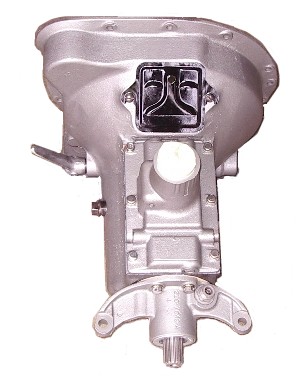
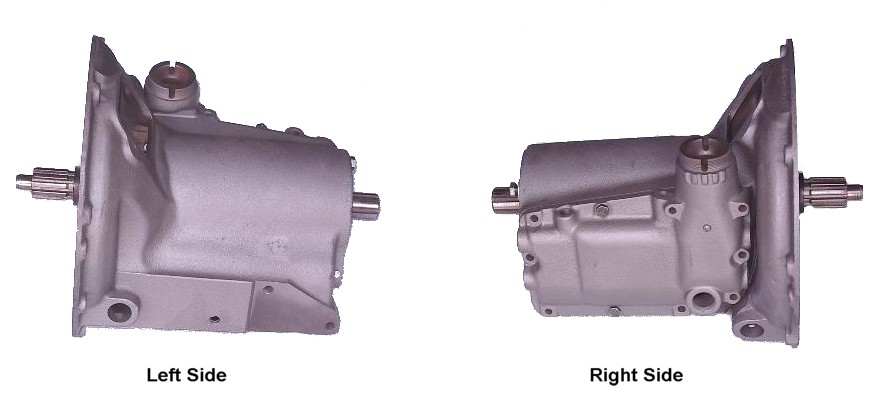
The Ford three speed transmission for passenger cars and light trucks was introduced beginning with the 1932 Ford, and continued with variations up through the 1952 light trucks (F-1 series). The question often comes up about using later gears in early cases, different shifter top housings and levers, different rear mounts, clutch release shafts, and even choosing the gearbox case itself. Gearbox Housing (7005) If you have read our website page on the gearbox cases, you already have the basics about what the choices are. You would also have to include the 1932-34 Model B toploader gearbox as well. This three-year-only gearbox used the same gears as the V8 powered 1932 car or truck. The obvious difference was the shape and bolt pattern of the front bell housing portion, which was designed to attach to the Model B four cylinder motor. It mated up to the torque tube driveshaft assembly through the same rear mount used on the 1932 V8 cars. So, to summarize, you have four different toploader gearboxes to choose from: 18-7005 (used from 1932-34), 48-7005 (used from 1935-36), 78-7005 (used from 1937-52), and the B-7005 (used in 1932-33 as pictured below). You could also include the Lincoln-Zephyr gearboxes (see 1939 sample below) which will also accept the Ford gear sets. Remember that the case itself will have the "7006" casting number rather than the 7005 part number used in the parts manuals.
Model B case shown above with 1939-52 shifter housing and with 1942-52 open drive rear mount
We must also include the side-loader cases (01A-7005) which were introduced in late 1939 for the new 1940 Ford and Mercury passenger car models. These were continued through 1948 Ford and Mercury passenger car production. This gearbox was also available on the Ford light pickup trucks through 1952 production. Since the critical internal dimensions for this gearbox are the same as the toploader gearboxes, you can interchange the gear sets with these as well. Many hot rodders back in the 1950's and early 1960's would utilize the side loader gearboxes with the appropriate column shift linkage and steering column, in order to remove the shifter from the floor of their car. Upgrading the early three speeds with the late style (1940-48) gears and synchronizers is a common option. Provided the gearbox was to be installed in its original vehicle, this was pretty much the extent of the work. However, sometimes the owner is creating a one-off type vehicle like a hot rod or otherwise custom chassis, he may want to modify other aspects of the transmission. Clutch Release Shaft
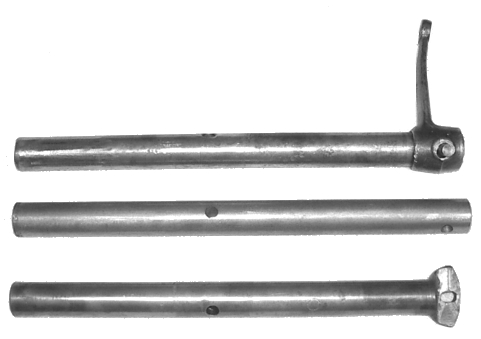
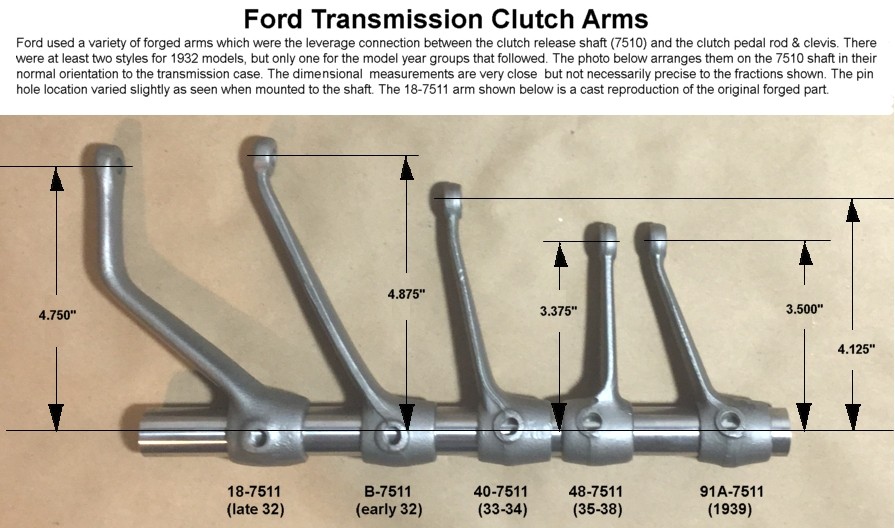
(7510) and Lever (7511) The clutch release shaft is one item that can be changed out for another. The basic shaft (B-7510) was a simple straight shaft with a hole in the middle for the clutch fork, and a hole in the end for a short lever/arm that was pinned to the shaft. There were several variation on these clutch arms, depending on the model year as Ford changed the clutch linkage to accommodate changes in their chassis design. Beginning in 1940 model production, Ford changed the release shaft somewhat by welding a flattened "tab" to the operating end. This tab has a 1/4" hole in it for a steel pin, which locked the shaft to a mating linkage that was anchored to the frame at its other end. These shafts carry the 01A-7510 part number. Either shaft can be used in any of the gearboxes I have listed above, and the choice is only limited by the choice of clutch pedal linkages desired by the owner. The clutch actuating arm that was pinned to the shaft from 1932 to 1939 models came in several variations, each of a particular length and angle from its mounting hub. The 18-7511 was used in 1932. The 40-7511 was used from 1933-34. The 48-7511 was used from 1935-38. The 91A-7511 was used in 1939 only. The 1940 and later models used the 01A-7510 shaft and therefore did not have the 7511 clutch arm. Click on the thumbnail picture below for a close-up look at the various types used.
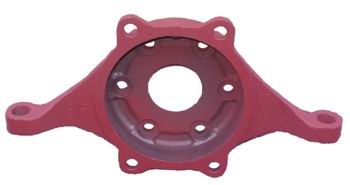
Rear Bearing Retainer or Rear Mount (7085) There were about seven different rear mount choices used on these transmissions, and they can all be interchanged. Refer to the rear mount webpage for pictures and part numbers. You want to use the rear mount that matches the chassis center cross-member in your vehicle. The 1932 through 1948 passenger car mounts were designed to be used with the closed drive (torque tube) driveshaft that Ford used. The 1942 to 1952 rear mount (21C-7085) was used on the light trucks with the open driveshaft, so if your vehicle will have a regular open driveshaft, you will have to use this rear mount in conjunction with the open drive mainshaft inside the gearbox.
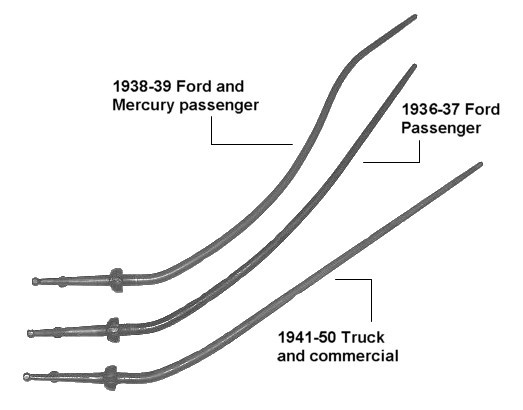
The 1932 to 1936 rear mounts combined three separate components, which does not include the four special L-head bolts that fit into the rubber mount. Ford went with a one-piece rear mount beginning in 1937 model production (see the 78-7085 rear mount pictured above). These used the same rubber donut mounts and special steel washers and shoulder bolts that were used on the front of the motor (set up between the water pumps and the frame of the chassis). Shifter Levers (7210) for Toploaders Ford produced a variety of shifter levers for their toploader three speed transmissions. The early lever from 1932 through 1935 model years had a short stub end (the part that goes into the shifter housing), which was designed to operate with the early shifter housings with the slanted tower. When Ford changed the shifter housing beginning with the 1936 models, the shifter lever stub end was lengthened to operate in the upright style shifter towers. The early (32-35) lever will NOT fit and operate in the 1936 and later shift housings. The following levers are the only choices when fitting the transmission with the late style (1939 and newer) synchronizers.
That leaves the three basic styles of levers pictured above: the 1936-37 type with the single gentle curve from the fulcrum out to the shifting knob, the 1938-39 type with the double bend (swan neck) shape, and finally the levers used in the 1940-52 pickup truck and commercial vehicles, which had a single angle bend just above the fulcrum and ran straight out to the knob. Transmission Gear Sets The changes in the Ford transmission gears were, in general, an ongoing process over the years. Refer back to the gearset link for additional details. To make it short and sweet, you can find what are known as the "early style gears" and the "late style gears" between the years of 1932 to 1952. As a rule of thumb, you will want to go with one set or the other, as very few parts will interchange between the two. When people refer to the "39 Transmission" they are more or less referring to one with the late style gears and synchronizer. You must have the wide type 2nd/3rd shifting fork in order to operate the late style gear set and synchronizer. This special fork can be installed in the 1936-38 type shifter housing to operate the late gearset, but the 1939 Ford/Mercury double detent shifter housing is preferred for its improved shifter interlock system. Refer back to the shifter housing link for more details. Late Gears in Early Cases You can install the Ford - Mercury - Lincoln gearsets from 1939-48 into the early gearboxes with a minor modification to the main drive gear. If you have any of the following cases, you must make this change to allow the main drive gear to fit: B
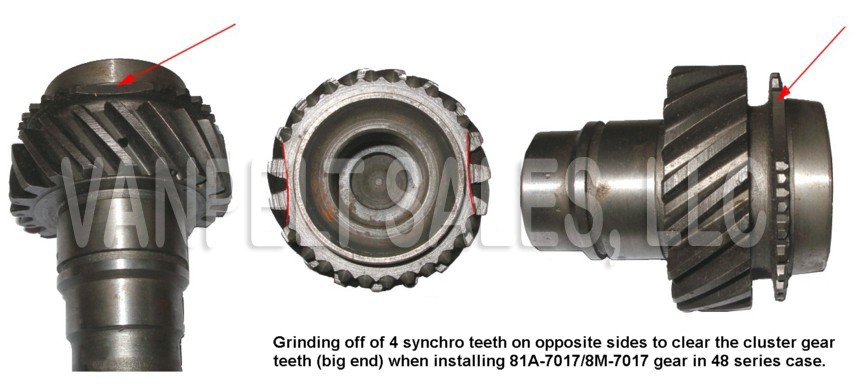
Case (1932-34 four cylinder) Since the 1939 to 48 main drive gears (81A-7017, 8M-7017, 26H-7017, 56H-7017) have the 30 tooth synchro ring at the back of the gear, this may interfere with the large end of the cluster gear during installation, preventing you from pushing the main drive gear all the way into the gearbox. By grinding off 3-4 teeth on opposite sides of the synchro teeth part of the gear, you provide enough clearance to install the main drive gear into the case all the way. This was actually done by Ford on the Lincoln-Zephyr drive gear. Click on this picture link below for an enlarged photo of this modification:
When doing this modification, be sure to remove any burrs and to clean the gear thoroughly to remove any metal particles. Then press the ball bearing on with the oil baffle, and install the snap rings. Be sure to do this to the opposite sides of the gear's synchro teeth circle so that the gear is balanced. It's now easy to install the main drive gear into the gearbox.....just rotate the gear until a ground-off section is at the bottom side and insert the gear. This section of the main drive gear will now clear the large end of the cluster gear. Also, it's important to note that you must use the 68-7222 or 81A-7222 shifter housings when using late style gear sets in any 1932-35 gearboxes. The shift fork groove in the 1936-52 low/reverse slider gears are too large for the 1932-35 shift fork. Likewise, you can not substitute the 1936-52 low/reverse fork (68-7231) into the 1932-35 slanted shifter housing. On stock 1932-35 Ford cars, this means that the shifter tower opening in your floor pan will have to be opened up to the front an inch or so to clear the upright type late style towers. Late Shifter Housing on Early Gearboxes Let's say that you have a late style shifter housing (68-7222 or 81A-7222) and wish to mount this to a gearbox that is built with the early 1932-35 gears. These are the combined straight & helical cut teeth and the mainshaft that has the six straight splines (B-7061). Since the late style shift fork has the wider spread tips, and the usual low/reverse slider gear (B-7100) has the narrow fork groove, it would be a sloppy fit in the groove. You can substitute the 67-7100 gear in place of the B-7100 gear. They are identical except for the shifter fork groove, which is larger to match the 68-7131 fork. |
|||
|
Copyright 2023 - VANPELT SALES LLC - All rights reserved |
||||